

"I told De Zerbi to keep turning the world upside down, I will watch it from a distance. I respect so much what he is doing" Jurgen Klopp.
What innovative strategies is De Zerbi implementing that have earned him praise from well-respected coaches? In this article, we delve into how Brighton plays out from the back and the unique role of its central players in achieving this.
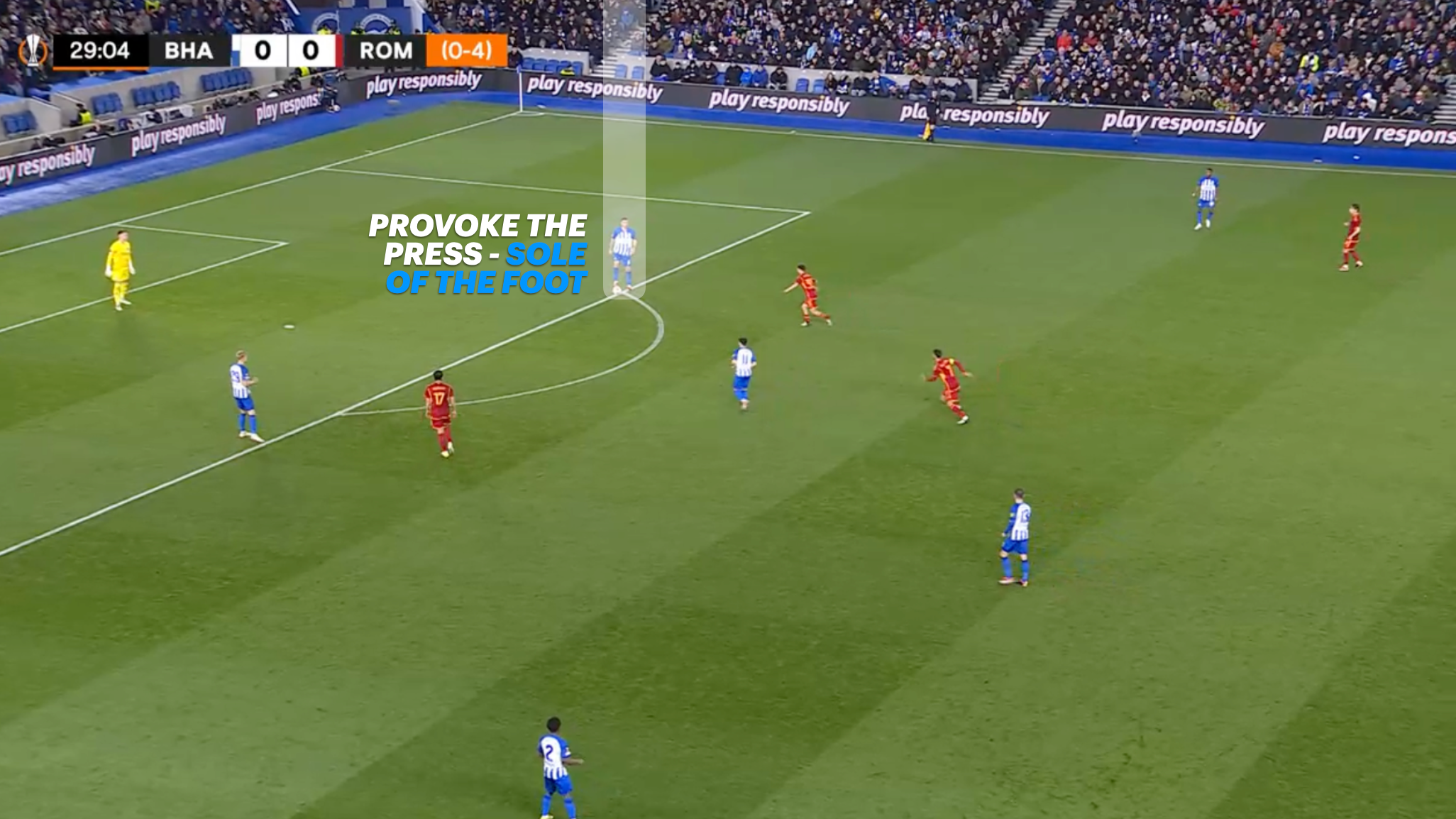
Provoke the Press
The technical execution when a player is on the ball is to control it with the sole of their foot. De Zerbi explains that “controlling the ball well with your foot allows you to maintain control of the ball when the opponent comes to press. If you receive the ball while leaning your body to one side, you may exclude yourself from a play”. Placing your foot on the ball is a provocative act for opposition players and supporters. In the past, it may have been viewed as a way to mock or ridicule the opponent, but this is not the intention. The main purpose is to save split seconds by manipulating the ball and passing in any direction, rather than controlling it with the inside or outside of the foot. The centre-backs stand with the ball in a controlled manner, assessing where the pressure is coming from rather than running with it.
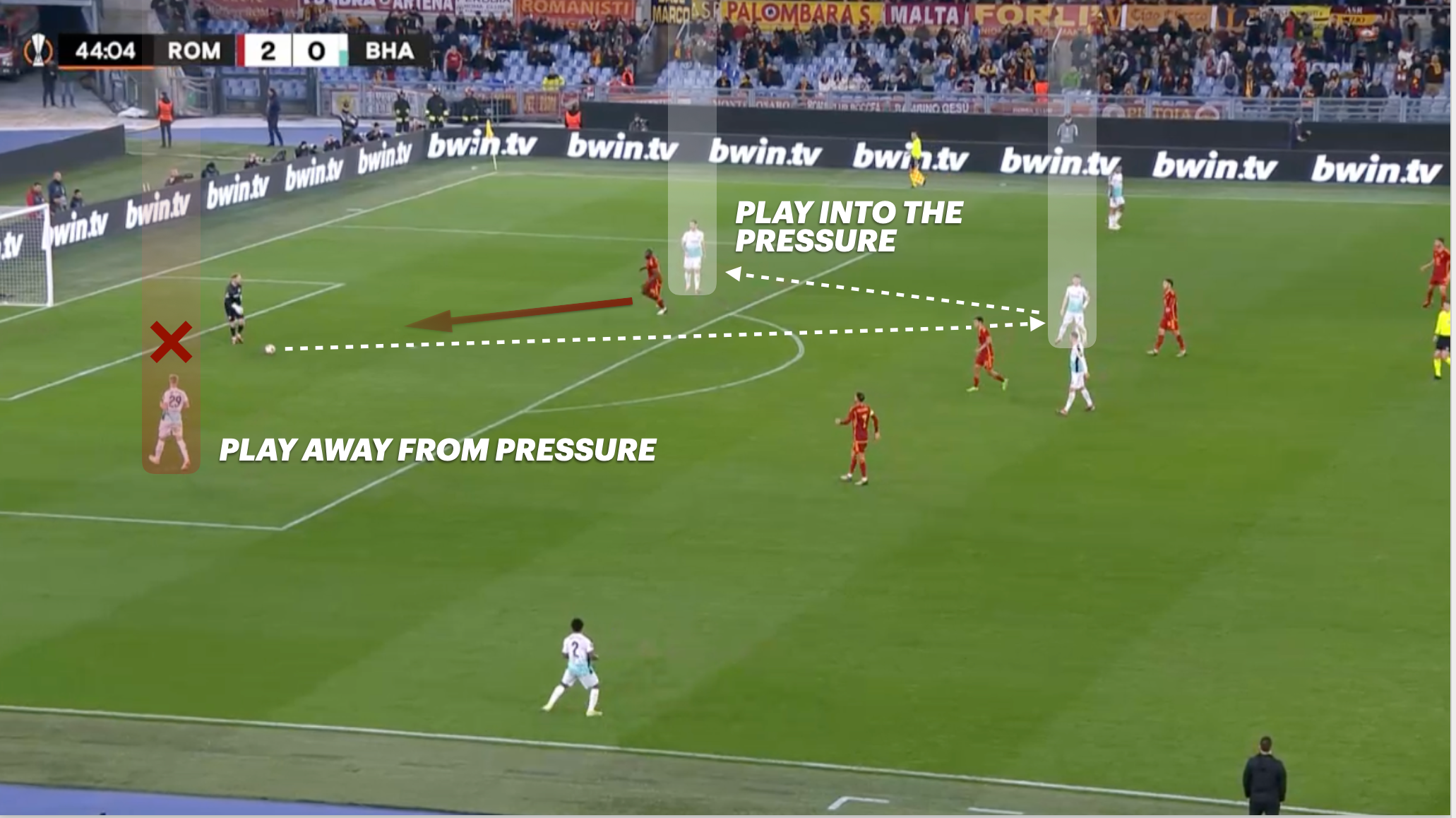
Play Into the Pressure
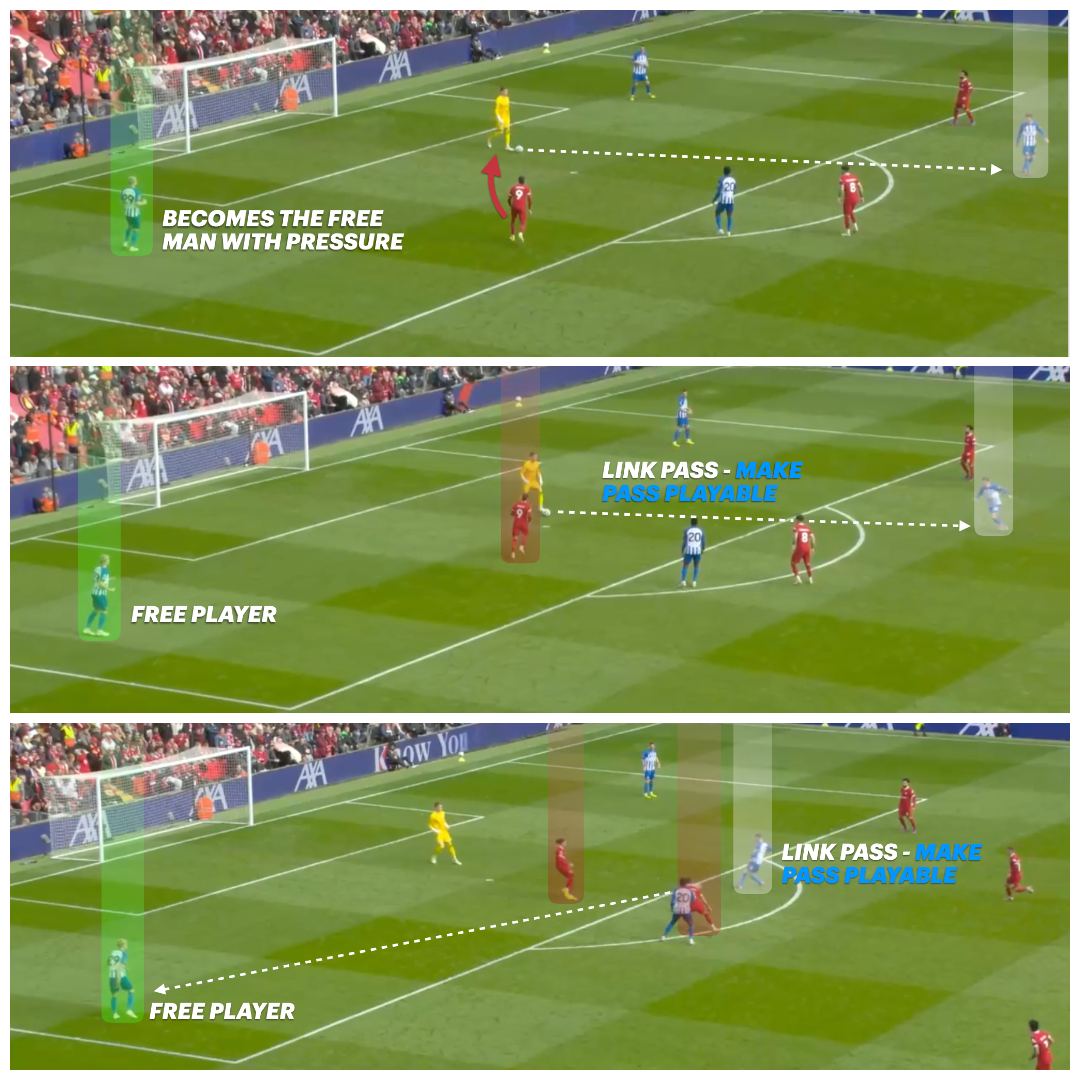
De Zerbi, the football coach, has a unique approach to dealing with pressure on the ball. Rather than playing away from pressure, he encourages his players to play into it. This is achieved through third-man combinations, which allow the players to find their free teammate who the opponent's pressing player initially marked.
In central areas, the goalkeeper and centre-backs work together to identify the source of the pressure. The double-pivot players make small, sharp movements to support the player on the ball and link the pass to the free player. Timing is everything. This approach helps De Zerbi's team break through the opposition's defence and create scoring opportunities.
You can find a description from the man himself on this link here
Play Through the Pressure
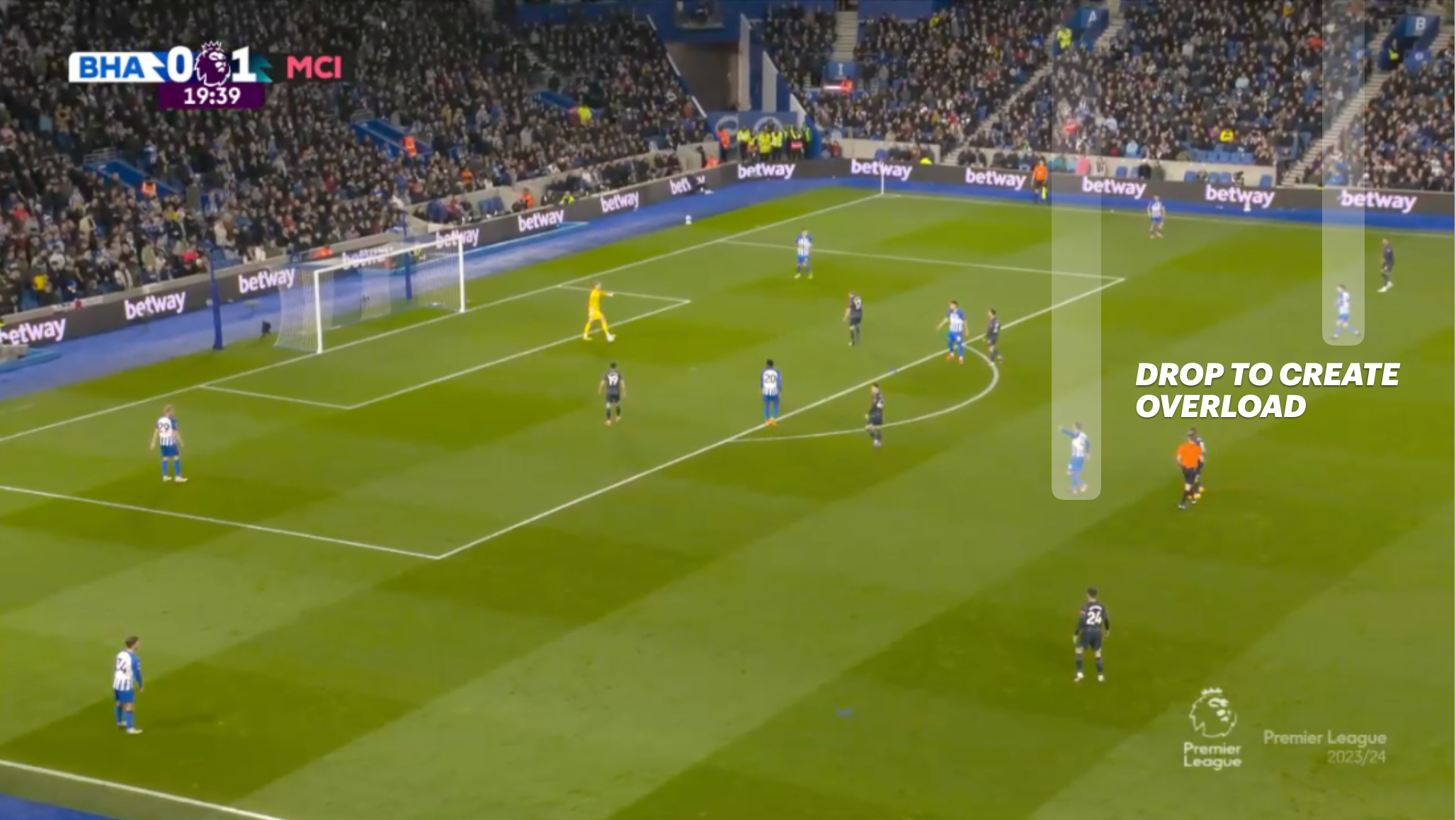
Teams aim to disrupt Brighton's double pivot by preventing them from linking passes and marking them aggressively. When this happens, the responsibility falls to the vertical line below to provide support and link the play. To play through the opponent’s initial press, the forward players must drop into the space vacated by the opposition's high-pressing midfield. The forward player requires short, sharp movements to escape the back pressure from the centre-backs. De Zerbi also sets his wide players ready to spring in behind any high-pressing centre-backs to try and free up his forward players.
The forward players' primary objective is to turn and drive at the defensive line. However, Brighton's midfield players are quick to win back their markers and support underneath the ball. Brighton's coaching and practice of these patterns give them an edge, as their players are already reacting to the following action before the opposition understands what the play will look like. This level of preparation and anticipation instils confidence in the potential success of De Zerbi’s strategies.
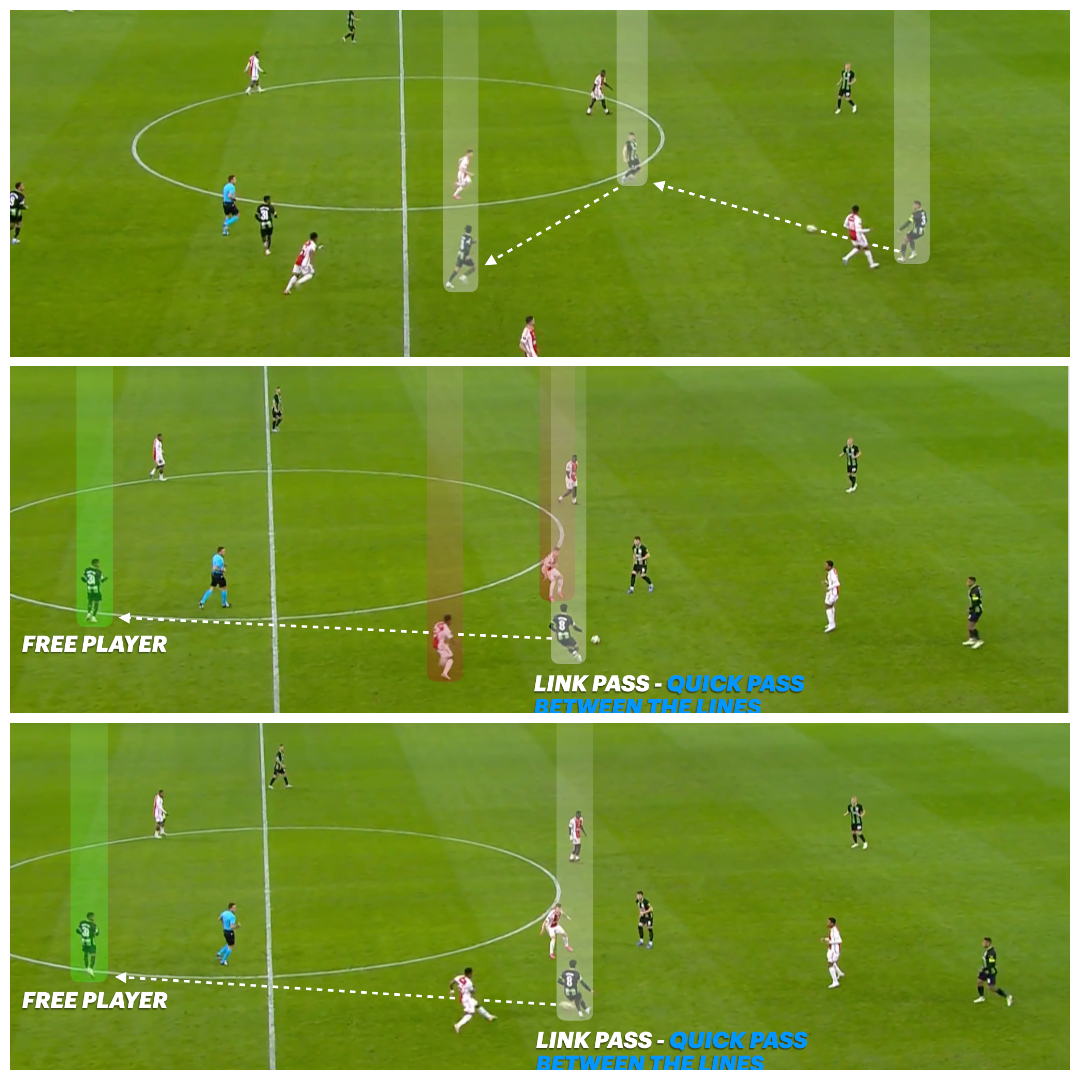
Selecting the correct pattern in football can be challenging. The high-pressure tactics used by teams leave players with minimal time to make decisions and execute actions, especially in high-risk areas of the pitch. If the ball is given away, the opposition can quickly launch a counter-attack, putting the Brighton goal in danger. However, with risk comes reward. De Zerbi coaches his players to recognise pressing patterns and react accordingly, improving their chances of success.
Below, you’ll find some practice drills that replicate the central build-up patterns used by De Zerbi and Brighton.